"In time I exist and in time I speak," said Augustine; and added, "What time is I know not." In a like spirit of perplexity I may say that in court I exist and in the court I speak and what the court is, God knows, I know not. I do know however, that the court is not time; but temporal it is, changeable and various, space-bound, and wandering, never continuing in one state.
Walter Map, De Nugis Curialium (Courtiers' Trifles), c. 12th century.
I am an insufferable, pretentious douchebag/asshole/fucktard (depending on who you ask), and I accept that. Almost everyone I meet I can talk, in-depth with them, about at least one genre of music or particular artist. With some people I can go on lengthy tangents about the fashion world and designers. Literature and Film is much the same. With even fewer people, possibly a handful, can I start a discourse on the art world and art history that encompasses just about everything. However, have I yet found a person who could keep up with all those subjects and interests at the same contemporary and global rate? Unfortunately, no, even though we are never truly
 |
| The supposed most NY summer photo, A contemporary cross-current. Cronut, Rain Room, Citi Bike, Turrell, old Met pins Rights to Editors of Hyperallergic. |
However, existing at so many cultural junctions does present some unique insights and opportunities to cultural and social events that are deserving of record. The event I refer to is, of course, last Wednesday's Jay Z performance/video shoot at Pace Gallery in Chelsea. To begin, this is not a review of Magna Carta Holy Grail, Jay Z's new album which he was shooting a video for one of the songs from, nor is this a critique on whether or not Jay was actually in the capacity of performance art while partaking in the 6-hour performance/shoot. This is a critique and insight into what many in the art world do not understand, nor do many in Hip-Hop and street culture understand. Essentially, this is the two sects of of the presumably "high" (art and fashion) and "low" (hip-hop, street) cultures finally coming together.
As a preface, none of this is incredibly new as Fab 5 Freddy amply demonstrates and the rise of graffiti culture being accepted into galleries since even the early-80s shows us. To reiterate, none of this is incredibly new. (Also, to start, I identify Kanye and Jay Z as the primary progenitors of this aesthetic, although there are many, possibly more critical, artists and rappers who -- due to popularity -- remain misunderstood or under the radar.)
 |
| Ne-Yo, Kanye, and A$AP Rocky in different fashion modes |
What is new, though, is the speed at which this hybridity of art, fashion, and music are coming together, and the inability of each of these three parents to really understand how the other is and will be influencing the other in the future. Or, specifically, how to situate themselves in this new form of art. For every comment on Jerry Saltz's facebook post or Hyperallergic's critique that blatantly demonstrated the racism directed at Jay Z and Hip-Hop coming into their world, there was another Hip-Hop and youth culture source that brought down Jay because they didn't understand his references or lyrics (such as Big Ghost and others). Complex magazine last Wednesday didn't know which way to jerk it, since they're arguably one of the first to pick up on this art and fashion drive coming into their world, but presumably more to the hip-hop side since they're still relatively new to the art game. Want the old Jay? Buy his old albums, and enough with all this.
But let's first delve into some history. It's useless to point out that the internet and its omnidirectional purpose is the catalyst for all of this, so let's get into specific instances. Beginning around 2006, with Kanye's ascent, came Kanye's blog and his beginning ambitions of fashion and music coalescing together. It's no secret that 'Ye loves Paris, but his identifying of Riccardo Tisci (designer of both Watch the Throne and Cruel Summer covers, as well as
 |
| George Condo The Cracked Cardinal |
 |
| George Condo Work for Runaway single |
On the art world side of things, we have Pharrell giving a panel discussion on architecture and design (possibly, who knows, maybe, someday working on a collab with Zaha Hadid?), Chris Brown hanging around a lot of graffiti artists (possibly, who knows, maybe being a graffiti artist himself?), Jay Z being caught around Gagosian, Art Basel, and throwing out the Tate Modern and MoMA in his new track (and definitely working on some kind of holy shrine to Basquiat with Swizz Beatz), and Danny Brown blurring the lines of all sorts of shit. However, there is still a long way to go.
For Yeezus, Kanye caught a lot of flack for not having much to say on society, and presumably making an album just about himself, but a lot of the lyrics on the CD, specifically "New Slaves" are spot on about the industry he and others seek to ingratiate themselves into, particularly this verse
There's that broke nigga racism,
That's that 'don't touch nothin' in the store,'
And there's that rich nigga racism,
That's that 'please come, n' buy more.'
Much of the pictures and talk of A$AP Rocky and Kanye at New York Fashion Week, or Anna Wintour bringing black basketball stars to NYFW and then confirming that they were able to pick out the best outfits, only serves to show that white people and their expectations still retain some racist fascination when Blacks enter their worlds, even when invited. It's like telling a person of color that they are very articulate, and it's not so dissimilar from Dave Chapelle's "Chicken" skit in which he describes a white family avidly watching a black person eating chicken "Look at him, he loves it. Just like it says in the encyclopedia." It's no secret that white society enjoys a distanced fascination of black and hip-hop culture, as long as it stays distanced, and unless it is wealthy. And, it's no secret that much of the fashion world is still quite racist and very reactionary, the Met's PUNK: Chaos to Couture show easily demonstrating the reactionary aspect, and gallerist Gavin Brown, with some imbued bias, identifying the fashion world as a step behind the art world. However, this is all to be expected, as the next line in Kanye's "New Slaves" mentions:
"What you want, a Bentley? fur coat? a diamond chain?
All you blacks want all the same things."
Because, as Charles Ramsey showed us, people performing to our expectations gives us the biggest delight, be it personal or work relationships, or just in general. This is not confined to just persons of color performing, but
 |
| Charles Ramsey |
***
The passage I started this entry with is from a 12th century text by Walter Map, Courtiers' Trifles, in Michael Camille's book Image on the Edge: The Margins of Medieval Art. In the book, Camille notes that the medieval court was arguably the first 'youth culture', arguing that the courtiers and individuals in the margins of the court -- as well as the monastery, church, city, and medieval texts -- secluded themselves from the rest of society in their quest for knighthood, and in the margins of medieval texts wrote and drew out their fears of the lower orders, 'subjugating themselves to this pseudo-spiritual code of ethical chivalric behavior, and in turn subjugating all other bodies beneath them." By the 12th century, this was a dream of a lost order. "While they placed others in margins, they themselves were already half there."
I do not think there would be much argument from Camille or others to say that hip-hop and the black community have often been marginalized in the art and fashion world -- relegated to, or expected to produce, forms of art seen as lower skilled, or low-brow, such as graffiti, folk art, or as it's often called --'outsider' art. Yes, of recent, there are performance artists such as Clifford Owens, Xaviera Simmons, Malik Gaines -- who wrote a fantastic dissertation on 1960s performance and the Black Transnational Imagination -- but Black performance in the art world has been much limited to either black masculinity, perceptions of the body and sexuality, and the overarching homophobia inherent in that, and not much else.
So, to get to the point: What is happening?
In this instance, it is basically a fascination of celebrity and, as Hrag Vartanian pointed out in a quick discussion, the Greenbergian idea of the "golden umbilical chord" via the artist -- this instance involving not only Jay Z, but Marina Abramović, Lawrence Weiner, Diana Widmaier-Picasso, et al. -- being attached to the standards and conventions of the art world even if they are trying to disrupt or intervene on it. It is why, traditionally, avant-garde
 |
| Jay Z Olive People's "Big Daddy" frames |
It's a bit obvious to point out that for Jay, much of this was just a financial decision -- he's a businessman more than a rapper these days. However, removing all influence and affluence, we have a black man with no MFA or visual arts pedigree, besides admiring artists from Basquiat and Twombly to Serra and Picasso, coming into one of the largest and most renowned galleries ever and conducting possibly the biggest, or at least most recognized, art event of the year, and having it broadcast on all channels -- not just those unto the arts community. This is symbolic of a marked shift in the art world. Yes, it's because of who it was, in that there is no doubt, but don't think for an instant that occurrences like this won't become business normal in the future as millions of youth from all sorts of groups see what is possible and afforded to them, now (and this is also not saying that youth culture must draw inspiration from Jay Z and others in order to be inspired by art and fashion).
When I think on this occurrence, I am reminded of a recent economic report on high-achieving, low-income teen enrollment to colleges. The study found that high-achieving, that is top 10% on the SAT, and low-income, that is a family income less than or equal to $41,472, students were less likely, or totally unlikely, to apply to highly-selective colleges, even though such colleges afforded the student less to pay out-of-pocket. The New York Times

The art and fashion worlds are of a similar failure; however, this hybrid is and will be changing that for those millions of youth.
Although only nine years and less than a half mile distance separated the two, Jay Z never really knew about Basquiat growing up, even during the latter's blazing ascent of the mid and late 80s. In his book, Decoded, he mentions that they weren't a part of the same crowd growin' up, and going into Manhattan -- to see the museum's or whatever -- is something one only did on school trips. Now, more than 20 years past the artist's (Basquiat) death, he's not only famous for his art, but celebrated for his infamy, and as Jay Z astutely figures in his book, Jean-Michel was the quintessential hip-hop artist; obsessed with fame and the mythical status of celebrity, a poet of
 |
| Jean-Michel Basquiat, Charles the First, 1982 For reference, this is the 'yellow Basquiat' that Jay Z owns. |
However, this is also my biggest problem with the shift in cultural attitudes, as I fear that in all the good that they are doing for the future of hip-hop and the art and fashion world, they are also not doing enough or falling prey to the typical élitism of the art world. By most standards, this is hip-hop de rigueur with the "Look what I got, n' fuck you if you comin' for it," mindset. Any who actually stoop to follow my inane news feed would be able to tell you that I had a pretty big problem with Jay Z's "Picasso, Baby" before even the performance/shoot happened -- hell, even before MCHG fully released I was questioning the song and its consequences at large. This is looking past it just being a bad song (the beat is alright, but some of the verses be runnin' on all Ls), because throughout the entire song, Jay Z just raps about artists' work he owns or the events he and Bey visit. This is a great direction coming off of Watch the Throne and the so-called luxury rap,
... but it also just comes off as extremely tasteless, ill-educated, and as a gross attempt to be 'in'. What is most frustrating about that, is that I know Jay Z is not tasteless, ill-educated, or bearing any reason to feel 'in', and that song does him a huge disservice in those departments. However, even worse is the disservice this offers to his fans, and this disservice extends past Jay and Kanye, encompassing almost every rapper whose become invested in this new direction for hip-hop.
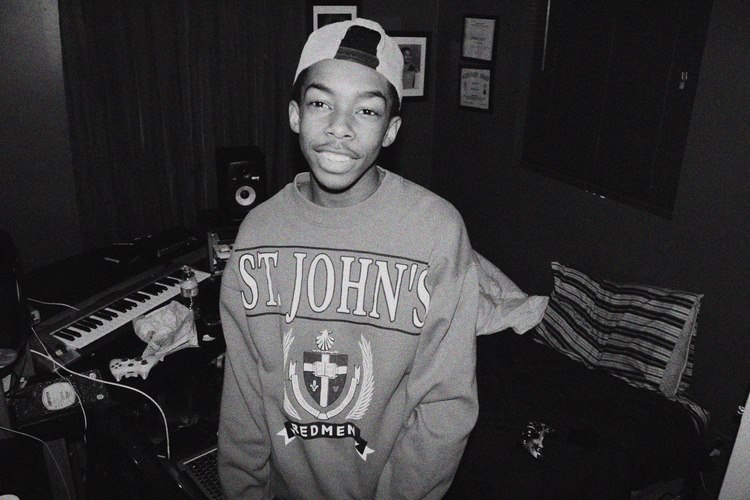
My biggest complaint with Kanye in the past has been his collaborations with artists only after they've become a safe bet. The Louis Vuitton Don working with Murakami? Only after Murakami produced the Superflat designs with Marc Jacobs. Workin' with KAWS? Only after dude had worked with different Japanese designers and started OriginalFake (although the brand has now closed up). Condo? Condo was big even in the late 80s/90s. Point being, Kanye hasn't been doing himself, or his fans, any big favors by working with or collecting different designers and artists only after they've become a fashionable art world name. The same goes for Jay Z, everyone's favorite
 |
| Bishop Nehru |
So, while such an old guard may be breaking through its traditionally liminal and marginal bounds, and seeking new direction in an old court, there is already discontent and upheaval in their own court. However, it is because of this break and the achievements of Jigga or 'Ye that future rappers, either those gaining popularity now or those yet undiscovered, will be able to make a real difference -- sans MFA, sans pedigree, but with real artistic thought and critical approach to the hybrid they were raised in.
In ending, I'll wrap up with a final passage from Camille's Image:
"... in 1323 the Parisian scholar John of Jandun describes how such strange and exotic merchandise (delicatis et extraneis) was sold at Les Halles, and how he is unable to give their names in proper Latin, propria nomina latina. ... Polysemous and multicoded, the city was the site of exchange, of money, goods ... creating a shifting nexus rather than a stable hierarchy. Each social group possessed 'its own concept of urban space just as the different interests of the city compete with each other for control of the social surplus'. Art was a crucial outlet for that surplus, with Paris becoming the first art centre in Western Europe."Although Paris is a ghost of its former artistic nexus, now more a superficial scion of the modern art world, the Internet has given rise to such a shifting, multicoded, omnidirectional nexus, and this broadcast to youth culture of what can be achieved only aids in destabilizing a stale hegemony in the art and fashion world. It's old hat that the art and fashion world are much behind in technology (Hello? Vogue? Zara? H&M? Welcome to the Internet) and the real Old Guard of the art world being ill-adept at using the Internet (however, artsy.org is on its game). The surplus is now in the Internet, myriad of new musicians every day will show you that, and art -- in all its mediums -- will of course be a crucial outlet for that surplus, but this time, through anonymity engendering equality, there will be a greater chance for artists and rappers on the margins to be accepted into a much decentralized court.
