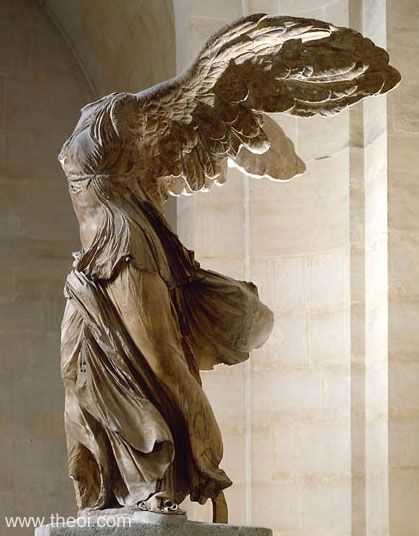
Oxford is a weird place. The typical
definition of weird being strange, uncanny, or otherwise bizarre could be
applied to almost any place people reside, with Oxford having its fair share of
such. Though, the etymology searched for here being the archaic Anglo-Saxon use of
the word wyrd – that pertaining to
Fate or Destiny (removing all ominous meaning from the origin of the former).
Never were there any intents or
reasons to attend the University of Mississippi, become enraptured by art
history, to start writing for Number: or
other art journals, or even to become taken with the art in Oxford and the
artists who purpose it forward. It just happened.
 |
| Rod Moorhead, James Meredith |
Ever since its purchase from a Chickasaw
princess, and the subsequent Anglicization of the town under the aspiration of
becoming the site of Mississippi’s first state university, Oxford has become
synonymous with culture and artistic heritage – an uncanny fate for a rural
area beset on all sides by differing mentalities and having no river to bear it
a port for cultural exchange.
Its significance as the literary
hub of the South is known the world over, and having the luck of being bonne située between Memphis, Atlanta,
and New Orleans has allowed it the opportunity to bring in some great music
acts – Fat Possum and Sweet Tea also producing some of the best Blues and Rock
music of late.
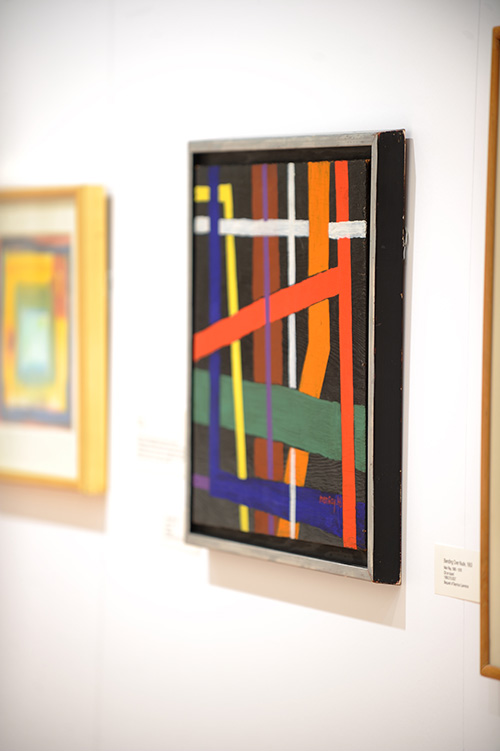 |
| Man Ray, a part of the Seymour Lawrence Collection |
Over the past few months, I have
visited with and interviewed the three with full intent and reasoning in writing
about them and their work. However, it was only through coming to learn about
this issue’s theme of Number’s
anniversary, and the focus on its artists, supporters, and communities of
affect that it appeared sensible to write of the three together, as if tied
together by fate. Looking at each not only as an artist, but as members of the
community and participants in its temporal contexts I noted their significance
to the arts of Oxford – simply, its past, present, and future, respectively,
and like any temporal process the three are inextricably linked, directly or
indirectly.
 |
| William Eggleston "Untitled "Glass in Airplane" Los Alamos series |
For starters, all three are
represented by Southside Gallery, the gallery Rod helped co-found in 1993. In
its inception, as he put it, “there were just a bunch of artists hanging out,”
displaying and showing new, great art to the community for the first time.
Artists such as Sally Mann, Christenberry, Eggleston, Glennray Tutor, and Jere Allen were all shown at the gallery for the first time – artists now recognized
across the South, if not the U.S. and abroad. “It was a learning experience,”
remarked Moorhead, referring primarily on how to hang exhibits and the
importance of placement, but I also took it as a nod to the community at large. As an example for both, he recalled a story where hanging a piece by Allen, in the central spot of the gallery, had drawn a visitor from across the other side of the Square -- the township icon of Oxford. The man had become mesmerized with the painting during his dinner, having never seen anything like it in the town. Another famous example, which echoes some present-day controversy, was of Mann's photographs of her children who appeared nude and were hung in the gallery. This prompted local authorities to browse the gallery and ultimately decide that they "saw nothing wrong on display." Rod handed over administration responsibilities in 1997, but has remained a
fixture in both the gallery and city, figuratively and literally sculpting out
his visions for Oxford as well as Mississippi.
I met Rod through his wife, Younok,
whom I shared an introductory art class with. Her insight during class
critiques was refined beyond most of the opinions given in class, and finally
conversing with her and Rod during a museum reception I became enamored with
their ideas. I soon began to find his work, and the inherent beauty of my
surroundings, all around Oxford. Large, public works by Rod, placed around the
university at some of the most important junctions, include the James Meredith
Memorial – between the Lyceum and library – and the Gertrude Ford Center’s
large sculpture, Concerto. The latter, of child
and violinist playing together, bears the likeness of former chancellor Robert
Khayat in his youth – who secretly sat and learned how to properly hold the
instrument for the piece (both he and Rod later confirmed speculation as to the
sculpture’s identity). Rod has captured much of the history of Oxford in his
works, but it is in his personal work that he specifically revives history.
 |
| Rod Moorhead "Seven Furies" Mississippi Museum of Art 2011 Juried Show |
In the smoke-firing, the Furies –
often wrapped in pine straw, grass, leaves, hay – are embedded with an element of aleatoricism. With
this element of chance being imbued into the Fury, the piece finally takes on,
and accepts, its fate. While he never creates art to have a specific meaning or
symbolic attitude, Moorhead has taken a symbol of cruelty and fairness –
justice incarnate – and changed its fate not by any calculation, but by chance.
It was upon first meeting Rod that I was inspired to start on a new path –
taken by chance and not unlike Frost’s idyllic path – that led me to the gallery
Rod first helped co-found. There, I first took in the work of one of the most
active artists around Mississippi today: Carlyle Wolfe.
It was only natural for Carlyle to
be the first artist I wrote about, because it’s difficult to not find Carlyle somewhere around
Oxford. As one of the Friends of the Museum, an Associate Professor at the
University, a member of Number:, and
regular at Southside it was only inevitable I would come across her work (it,
too, being shown widely across the South).
 |
| Carlyle Wolfe "Late, Winter Evening" 2012 |
The Zinnias, or cutouts and sections of flowers – stems, branches,
leaves, petals – are an on-going idea of Wolfe’s, layering them over one
another in a dense foliage, a thicket, that requires more than just the normal
five seconds before a canvas in order to unravel it. The cutouts themselves,
intricately drawn down to the minutest of details, take an incredible amount of
time to cut by hand. Or, that is, when she once was afforded the time to cut
them by hand. Now, the stencils are laser-cut, succeeding in perfection that only
a machine could produce.
For both Carlyle and Rod, whom I
spoke about New Media with at length, use new mediums to complete their
works – Carlyle the laser printer, and Rod neon and computational algorithms. While
both are quite common in other fields, they are still new fields of art in Oxford,
and it’s for Carlyle that Oxford is the actual technical support.
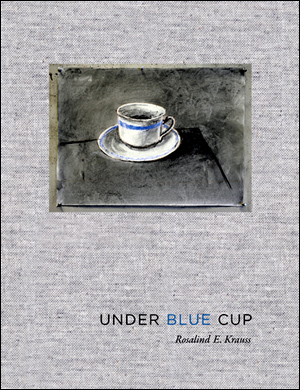 |
| Rosalind E. Krauss Under Blue Cup, 2011 Img: William Kentridge, "Still from "Weighing . . . wanting", 1998 Marian Goodman Gallery |
The saving grace to all this comes
from the Internet, or at least from another of Oxford’s own, Zach Tutor. However, Zach is not yet so well known within Lafayette county, but he is big in Japan,
as well as the West Coast. That is, he is at least much more
prominent in cities such as L.A., San Francisco, and various cities in Japan and
around the world than he is in Oxford.
 |
| Zach Tutor, Supersonic Electronic, 2009 |
It was only by happenchance that I
came across SE. During the snow storm of 2010, trapped in my room, and traipsing
between different blogs, I came across SE – amazed by the art I saw, and even
more so when seeing it was created directly in the town I studied. Zach has
helped thousands of artists, even Oxford’s Allan Innman, come to a larger field
of their audience, and in return has established relationships all over the
globe with some of the leading contemporary artists.
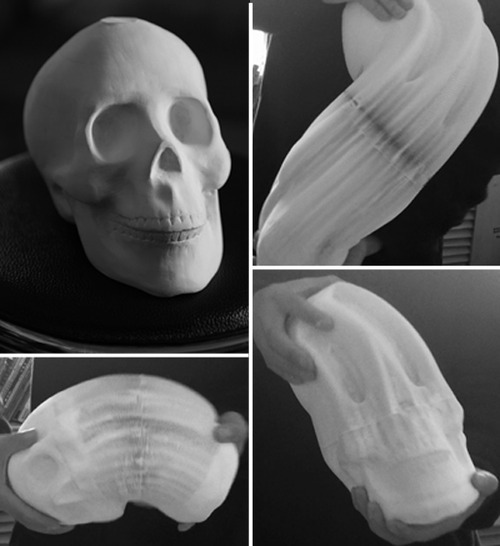 |
| Li Hongbo "Skull" Paper. 2012 Flexible paper sculptures |
This is something Oxford can learn,
and this is something Zach can teach and give to Oxford, particularly in regards
to contemporary art. The recent art department show at Southside and the on-going
monthly Art Crawls are great indicators of increased participation and progress
between the arts institutions around the city; however, there is a long way to
go.
To end, there is an oft-quoted maxim from the renowned figure of Oxford, William Faulkner, saying “To understand the world, one must first understand a place like Mississippi.” It’s high time that Mississippi, and Oxford with it, explore the reciprocate of that quote to keep on a path of progress and to stay weird rather than common. Oxford is not common. Keep Oxford weird.
To end, there is an oft-quoted maxim from the renowned figure of Oxford, William Faulkner, saying “To understand the world, one must first understand a place like Mississippi.” It’s high time that Mississippi, and Oxford with it, explore the reciprocate of that quote to keep on a path of progress and to stay weird rather than common. Oxford is not common. Keep Oxford weird.